T he execution of controlled explosions below the surface of the water is one of the most complex and demanding challenges in the engineering industry.
Underwater blastingis not simply an extension of land-based methods. It requires a completely different approach due to the density of water, hydrostatic pressure, and the need for absolute protection of the marine ecosystem.
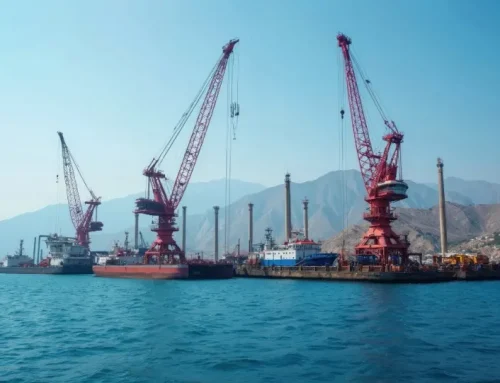
In EXORIXI, our specialization in port and subsea projects allows us to offer solutions where conventional excavation methods cannot cope.
Why do underwater blasting require surgical precision?
The main difference between a blast in a quarry and a blast on the seabed lies in the medium of energy transmission. Water is incompressible, which means that the water hammer shockwaveis transmitted much further and with greater intensity than air.
This creates two main challenges:
- Infrastructure protection. Neighboring quays, anchored ships or submarine pipelines are at risk from the sudden change in pressure.
- Charge Performance. Hydrostatic pressure affects the chemistry and performance of explosives, requiring special types of explosives that are resistant to water and pressure.
The methodology. Charging and firing below the surface
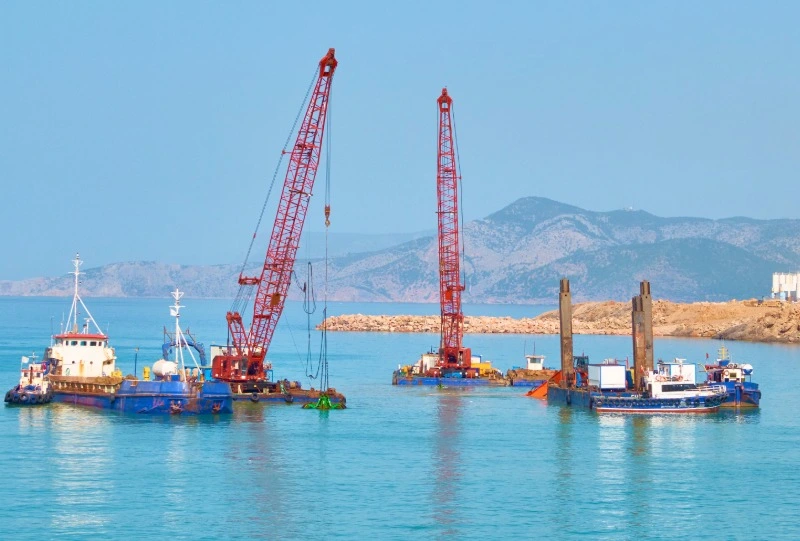
The process begins with subsea drilling, which is often performed by special platforms (jack-up barges). The accuracy of the drilling grid is critical, as visibility to the seabed can be limited.
During charging, sealed high-density explosives are used. Firing is done almost exclusively with electronic detonators. The millisecond precision they offer allows us to "break" the blast wave into smaller successive stages, reducing the overall hydraulic shock without sacrificing rock breakage.
Protecting the marine ecosystem. Bubble Curtain technology
One of the most frequent questions we are asked to answer in environmental studies is how to ensure the protection of marine fauna. The answer lies in the use of bubble barriers.
The bubble barrier is a system of perforated pipes placed on the seabed, around the blasting area. Compressed air is pumped through them, creating a dense “wall” of bubbles. This wall acts as a damper:
- Absorbs the energy of the shock wave.
- Reduces noise transmitted through the water.
- Prevents fish and marine mammals from entering the danger zone.
This technology is an international standard for environmental protection and Mining applies it with absolute consistency to every subsea project.
Applications in modern port and underwater projects
Underwater blasting is essential in a number of critical infrastructures:
- Harbor deepening. For the passage of ships with a larger draft (Post-Panamax).
- Laying pipes and cables. Creating trenches in rocky bottoms for the passage of natural gas pipelines or telecommunication cables.
- Construction of marinas. Development of port basins in tourist areas with strict noise and vibration restrictions.
- Underwater tunnels: Preparatory work for the foundation of submerged tunnels.
Underwater blasting requires a combination of experience, technology and environmental awareness. At Exorixi, we transfer our expertise from our headquarters in Serres to global scale projects, ensuring that the development of port infrastructure is carried out safely, quickly and with respect for the marine environment.
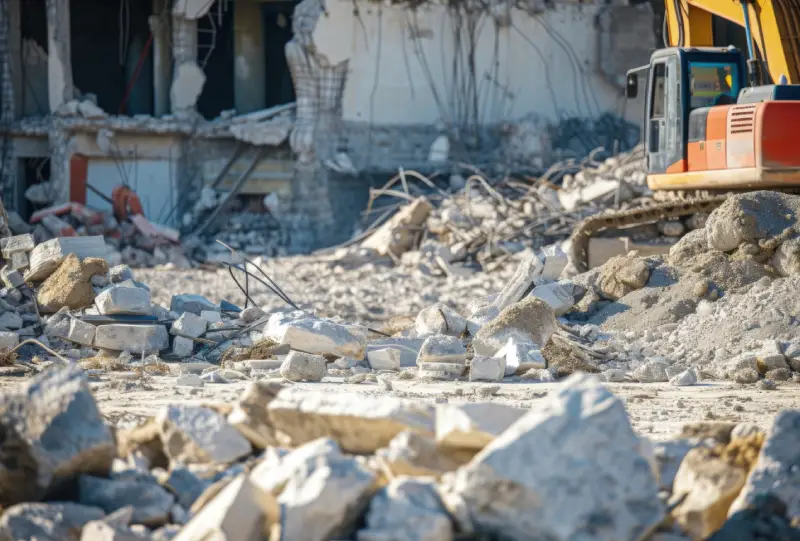
See more about the demolition services we offer or contact us to analyze the needs of your project.
For more information about the operations of our company and our services , you can visit our services page and contact us to find the solution that best suits your needs.
Here you can see some projects undertaken and completed by our company.
Here you can see some videos of our company.